Climate Displacement in Pakistan – A Review of Law, Policy, and Comparative Contexts
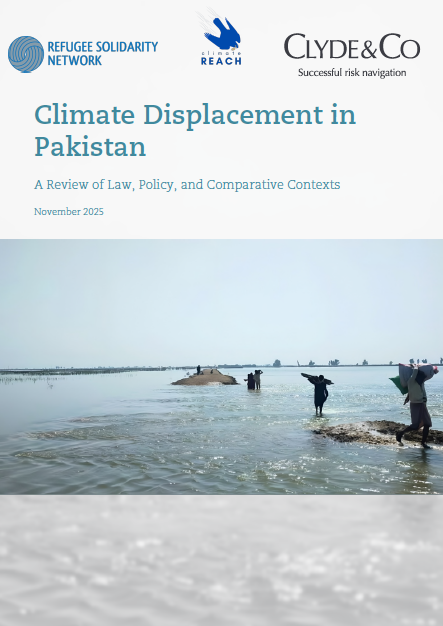
As climate change continues to increase the frequency and intensity of extreme weather events and natural hazards around the world, particularly in contexts like Pakistan that are most vulnerable to climate shocks, climate displacement has become an increasingly pressing issue.
According to the UN Refugee Agency’s (UNHCR) global report on climate change, conflict and forced displacement, over the past 10 years the number of forcibly displaced people has doubled to more than 120 million people, the majority of whom (around 90 million) “are living in countries with high-to-extreme exposure to climate-related hazards.”
Moreover, in the same period, around 220 million internal displacements (equivalent to around 60,000 displacements per day), have resulted from weather-related disasters; and climate-related hazards are set to increase over the coming decades, further imperiling displaced persons and the communities hosting them. Addressing the nexus between climate change and displacement must therefore become an integral part of national adaptation planning, supported by clear legislative, institutional, and policy measures.
The purpose of this report, written in collaboration with Clyde & Co. LLP and ClimateREACH, is to assess which protections currently exist for people displaced by climate impacts within Pakistan’s legal and policy frameworks, and to identify opportunities to strengthen these through lessons drawn from comparative and international practice.